|
|





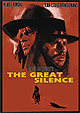
Jean-Louis Trintignant interprets Silence, a mute hired killer whose automatic pistol Mauser makes more holes than a sewing machine. The man who rents his services for just causes encounters the cruel Tigrero (Klaus Kinski) and tries to settle a score with his past. Corbucci's usual themes are found in The Big Silence, such as the solitary hit man or the use of scars as metaphors of psychological wounds, this time he substitutes muddy and nightmarish ghost towns for magnificent and peaceful snowy mountains. At first sight, the film seems a little harmless. While the story is familiar, especially shocking is the lack rooting for the hero. While Franco Nero (because of prior commitments he was not available for this role) always has a certain charisma, Silence is a flat, almost transparent character. Besides his visible handicap, he could almost pass for autistic, unless it's Trintignant who is unaccustomed to acting in an action hero roles and fails to deliver. Nevertheless, Jean-Louis Trintignant is a respected actor and the fact that he shares the screen with Klaus Kinski shows that the cast was taken seriously. When the end arrives—certainly the most painful conclusion in the history of westerns—everything becomes clear. The Big Silence appears then as a stylistic composition on the theme of the antihero. Certain indications can not deceive. The ambiguous direction seems to develop affection for Tigrero whereas it turns there's coldness towards Silence. The snow, Silence's handicap and his quasi-autism symbolize the naiveté and the purity that are very often evil's first victims. The true story on which the plot is based confirms the denunciatory aim of the Big Silence. Kinski also seems to avenge with jubilation all of the nasty characters whom he has embodied in numerous spaghetti westerns. One appreciates even more the minimalism of Trintignant's acting. As a footnote, those who saw the inferior Joe Kid with Clint Eastwood will notice the similarity with Corbucci's film (the murderer, the automatic pistol Mauser, the mountains..) but the comparison stops there. Cynical, atypical and anti-commercial par excellence, The Big Silence finds its value in its rarity.
 |
|